


High quality services
High quality services
It starts small. A prickle from the shower stream, a buzz when your knuckle brushes the tap, the vague sense that the water feels sharp tonight. It is easy to talk yourself out of it — until you learn what that sensation actually is: current from the water heater finding its way through the water, and through you, to earth.
A tingle in the shower is never normal and never something to monitor for a few more weeks. This article explains why it happens so often in Vietnam, the one button that tells you whether your bathroom is protected, and the checks that make an electric water heater boring again — which is exactly what a water heater should be.
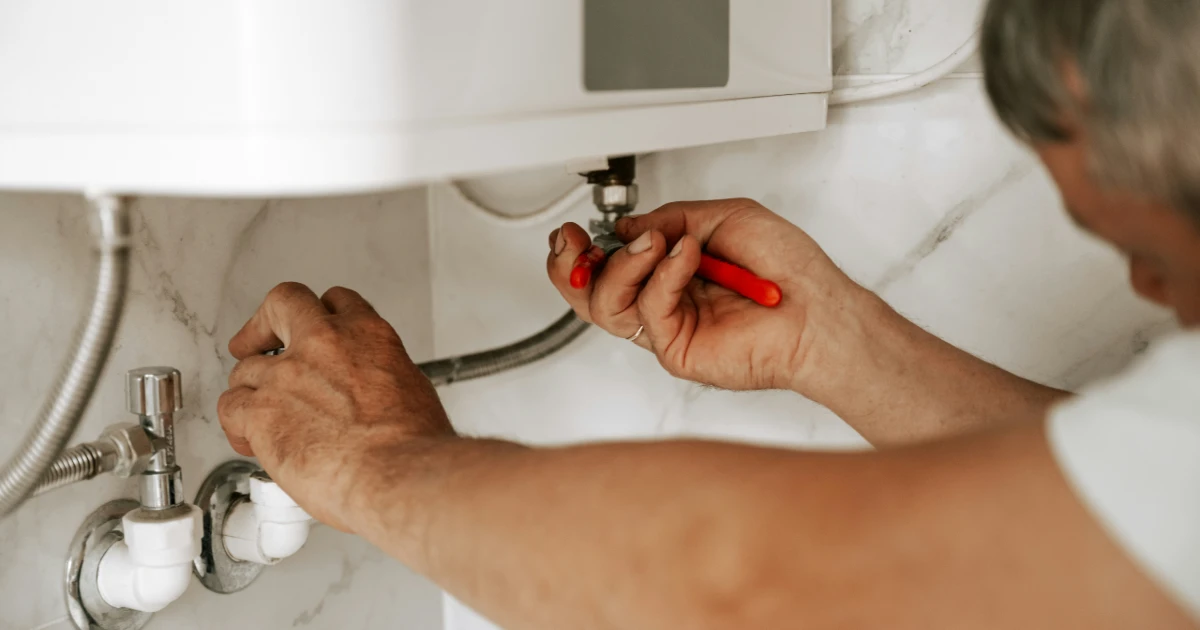
1. The heating element ages invisibly. Inside a storage tank, a metal element sits in hot water behind a thin insulating layer. Years of heating cycles and hard water scale crack that layer, and current begins leaking into the tank water itself.
2. Many buildings have no earth wire. In a grounded home, a leaking element trips the breaker instantly. In Vietnam’s many two-wire buildings, the leak has nowhere to go — so it waits in the pipes and the water for a person to complete the circuit.
3. ELCBs are missing or bypassed. Newer heaters ship with an ELCB on the power cord — the little box with a Test button. In practice it is often absent on older units, or was bypassed years ago when it kept tripping. An ELCB that kept tripping was doing its job: reporting a leak.
4. Humidity finishes the job. Bathroom moisture corrodes terminals and lowers every insulation margin. A marginal heater that would limp along in a dry climate fails faster here.
Go to your water heater and look at the plug or the small box on its cable. If there is a button marked Test, press it with the heater on: the power should cut instantly, then restore when you press Reset. That is a working ELCB — your bathroom’s last line of defence, and pressing that button once a month is the entire maintenance routine.
If pressing Test does nothing, the ELCB is dead. If there is no Test button anywhere — cable, plug or panel — your heater has no leakage protection at all. On a two-wire ungrounded building, that combination deserves a technician this week, not eventually.
Stop using the hot water and get everyone out of the bathroom.
Switch off the water heater’s breaker at the panel — not just the wall switch.
Leave it off. Cold showers or the kettle for a day or two are the entire inconvenience; do not test it once more in the morning.
Book a technician for a leakage test. Tell them it is a shower-shock case; a leakage test with a clamp meter plus an element inspection takes under an hour.
What you should not do: keep using the heater but switch it off before showering. Many Vietnamese households run storage heaters this way by habit, and it does reduce the risk — but with a cracked element the tank water and pipes can remain energised in ways that habit does not protect against, and it does nothing for the next guest who does not know the routine. Off-before-shower is a stopgap while you wait for the technician, not a lifestyle.
1. Leakage test. Measures whether current is escaping the element into the water or casing — the definitive answer to was that a real shock?
2. Element and gasket replacement. A corroded element or perished gasket is a standard part, stocked for common brands, and far cheaper than a new heater.
3. Anode check. The sacrificial magnesium rod inside the tank exists to corrode instead of the element. Nobody replaces it until the first service visit — after which the heater lasts years longer.
4. ELCB installation. Adding a cord or circuit ELCB where none exists, and verifying it trips at the right threshold — this is the fix that protects you even if everything else fails again.
5. Grounding the heater. Where the building allows it, bonding the heater and pipes to a real earth so leaks trip breakers instead of finding people.
Offering to book it yourself and share the report removes the delay excuse, and the report becomes your paper trail if the lease dispute ever matters.

– Press the ELCB Test button monthly; replace a dead ELCB immediately.
– Have the element, gasket and anode inspected every 1–2 years, sooner with well water.
– Retire storage tanks past 8–10 years — corrosion, not electronics, decides their lifespan.
– After any bathroom renovation, re-test: tilers and plumbers disturb wiring more often than anyone admits.
Calibee handles water heater leakage tests, ELCB installation and element replacement across Ho Chi Minh City, Da Nang and Hanoi — English-language booking, fixed quote before work starts, same-week visits. Details on our electrical maintenance service page.
Related reading
It is safer than showering with it on, and as a one-week stopgap while you wait for a repair it is reasonable. It is not a permanent answer: an energised fault can persist in pipes and tank water, and the routine protects nobody who does not know it.
Repeated tripping is the ELCB reporting a real leak — usually a failing element. Resetting it repeatedly, or worse, bypassing it, converts a repair bill into a safety incident. Book the leakage test.
Either is safe with an ELCB, grounding and periodic checks; either is risky without them. Instant heaters fail more visibly; storage tanks fail quietly through element corrosion, which is why the anode and element checks matter.


© 2021 Calibee


